Nerve Pain and Sciatica and How Chiropractic Can Help

Nerve pain — pain that radiates, burns, tingles or travels along a specific pathway — tells you that a nerve is being irritated or compressed somewhere along its course. In the lumbar spine, this most commonly presents as sciatica: pain that travels from the lower back through the buttock and into the leg, sometimes all the way to the foot.
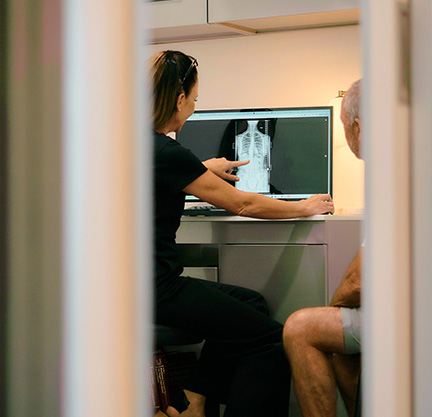
At Barefoot Health Co, we identify the source of the compression or irritation — whether that’s a disc bulge pressing on a nerve root, a facet joint contributing to foraminal narrowing, or muscular compression of the sciatic nerve through the piriformis. Each requires a different approach, which is why assessment matters before treatment begins.
Chiropractic care for sciatica focuses on restoring movement to the segments contributing to nerve compression, reducing the inflammatory load on the affected nerve, and progressively rehabilitating the supporting musculature to reduce the risk of recurrence. Cold laser therapy is a particularly effective adjunct for nerve pain, with a meaningful evidence base for reducing neurogenic inflammation.
What we commonly treat
Note: Severe or progressive neurological symptoms — including significant weakness or loss of bladder/bowel control — require urgent medical assessment. Please contact your GP or attend an emergency department immediately.
Frequently Asked Questions
Yes. Chiropractic is an effective treatment for sciatica caused by lumbar joint restriction and disc-related nerve compression. Severe disc herniations with progressive neurological deficit may require specialist referral — we will assess your presentation and advise accordingly.
How long does sciatica last with treatment?
Most acute sciatica presentations respond well within a series of treatments. Chronic or complex presentations — particularly involving disc herniation — take longer. Your chiropractor will give you a realistic timeframe after assessment.
Is sciatica the same as a disc bulge?
Not necessarily. Sciatica describes the symptom — pain along the sciatic nerve pathway — not the cause. A disc bulge is one common cause, but piriformis syndrome, facet dysfunction and stenosis can all produce similar symptoms. Assessment is essential to identify the cause and treat it appropriately.