Low Back Pain: Common Causes and How Chiropractic Care Can Help

Back pain affects most people at some point in their lives, and for a significant proportion it becomes chronic — a persistent background presence that limits what they do and how they feel. Whether it’s a sharp lumbar pain that came on suddenly, a mid-back ache that builds through the day, or a low-grade stiffness that’s been there so long it feels normal, the underlying driver is almost always the same: restricted joint movement driving inflammation, inflammation driving pain.
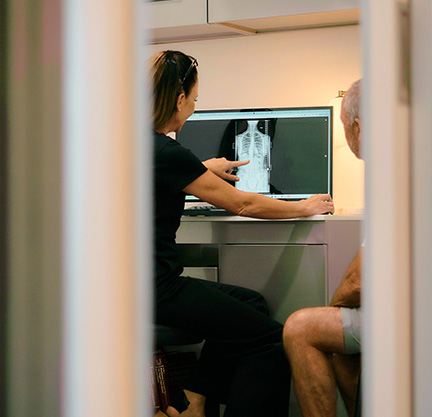
At Barefoot Health Co, we assess the thoracic and lumbar spine biomechanically — looking at which segments are restricted, how the pelvis and sacroiliac joints are contributing, whether the hip is affecting the lumbar spine, and whether disc or nerve involvement needs to be considered.
Treatment is targeted to what your assessment shows: chiropractic adjustment and mobilisation to restore joint movement, soft tissue release and dry needling for the muscles sustaining the dysfunction, cold laser therapy for rapid inflammation reduction, and a progressive home rehabilitation program through Physitrack to restore stability and prevent recurrence.
If your back pain has been dismissed, managed with medication alone, or told it’s just something you’ll have to live with — come and get a proper assessment. That’s the starting point.
We see different types of back pain that have a number of different underlying causes. The types of back pain we treat see are:
Frequently Asked Questions
Should I rest or keep moving with back pain?
In most cases, gentle movement is better than rest. Prolonged rest can reduce circulation, allow compensatory patterns to develop, and slow recovery. Your chiropractor will advise on what activity is appropriate for your specific presentation.
My scan showed a disc bulge — does that mean I need surgery?
Not necessarily. The majority of disc bulges respond well to conservative management including chiropractic care, rehabilitation and activity modification. Imaging findings don’t always correlate with symptoms — many people have disc changes on imaging with no pain at all. We will assess your presentation clinically and advise you honestly on the most appropriate approach.
Can chiropractic help with chronic back pain?
Yes, though chronic pain requires a different approach to acute pain. Long-standing back pain involves changes in the nervous system as well as the musculoskeletal system, and progress is typically slower. We will be honest about what to expect and build a plan that accounts for the complexity of your presentation.